What a hauler takes
A full-service hauler takes anything non-hazardous that two people can safely carry and a permitted facility will legally accept. In practice that covers the overwhelming majority of what ends up in a Brownsville garage, back yard, rental unit or job site.
- Furniture of every kind, including sofas, sectionals, recliners, dressers, bed frames and dining sets, covered on our furniture removal page
- Mattresses and box springs, including contaminated units wrapped for containment
- Appliances, with certified refrigerant recovery on anything containing Freon
- Electronics, televisions, monitors, computers and printers, separated for recycling
- Garage, shed and storage unit contents
- Yard waste, brush and limbs, including volumes the city rotation will not absorb
- Construction and demolition debris, sheet rock, shingles, lumber, tile, concrete and brick
- Hot tubs and spas, cut down on site
- Pianos and organs, uprights through baby grands
- Office furniture, retail fixtures and commercial equipment
- Whole-property clears, including estate, hoarder and foreclosure and eviction work
- Storm debris, separated into vegetative, construction, appliance and household streams
What no hauler will take
The refusal list is short and almost entirely regulatory. These are materials that cannot legally enter a municipal solid waste load, and a hauler who takes them anyway is creating liability rather than providing a service.
- Liquid paint, solvents and thinners. Household hazardous waste. Fully dried-out latex paint with the lid off is usually acceptable as ordinary waste.
- Pesticides, herbicides and pool chemicals. Regulated, and common finds in garage and estate clears.
- Motor oil, fuel and antifreeze. Liquids are on the city refusal list and are not acceptable in a general load.
- Asbestos-containing material. Specialist abatement contractors only. Common in pre-1980 flooring, siding and pipe insulation.
- Medical and biohazard waste. Sharps, contaminated materials and pharmaceuticals all route separately.
- Ammunition and explosives. Law enforcement, not a hauling crew.
- Untagged Freon appliances. Taken only after certified refrigerant recovery, which is a step rather than a refusal.
The gap that actually matters in Brownsville
Comparing the hauler list against the city list is the single most useful exercise for a Brownsville household, because the two barely overlap at the edges. The City of Brownsville collects brush and bulky items from one of four sectors per week on a rotating monthly cycle, delivered through Republic Services and funded by your utility bill. What it takes is generous for ordinary household material and stops abruptly at anything from a job site.
| Material | City curbside | Private hauler |
|---|---|---|
| Sofas, tables, chairs | Accepted, free | Accepted |
| Mattresses and box springs | Accepted, free | Accepted |
| Washers, dryers, water heaters, stoves | Accepted, free | Accepted |
| Tree limbs, shrubs, bagged grass and leaves | Accepted, free | Accepted |
| Refrigerators, freezers, AC units | Only with a recovery decal | Accepted, recovery included |
| Sheet rock, shingles, lumber | Refused | Accepted |
| Concrete, asphalt, bricks, dirt | Refused | Accepted, priced by weight |
| Car parts | Refused | Accepted, metal separated |
| Tires | Refused at curb | Accepted, routed to a scrap tire facility |
| Cardboard boxes | Refused, use recycling | Accepted |
| Household garbage | Refused, use your cart | Accepted as part of a clear |
| Paint, solvents, pesticides, fuel | Refused | Refused, household hazardous waste |
| Asbestos, medical waste, ammunition | Refused | Refused, specialist contractors |
City accepted and refused lists per City of Brownsville brush and bulky item collection guidance. Freon decal requirement per the same source. Scrap tire facility and free-disposal statement per the Brownsville Public Utilities Board.
Freon appliances are a process, not a refusal
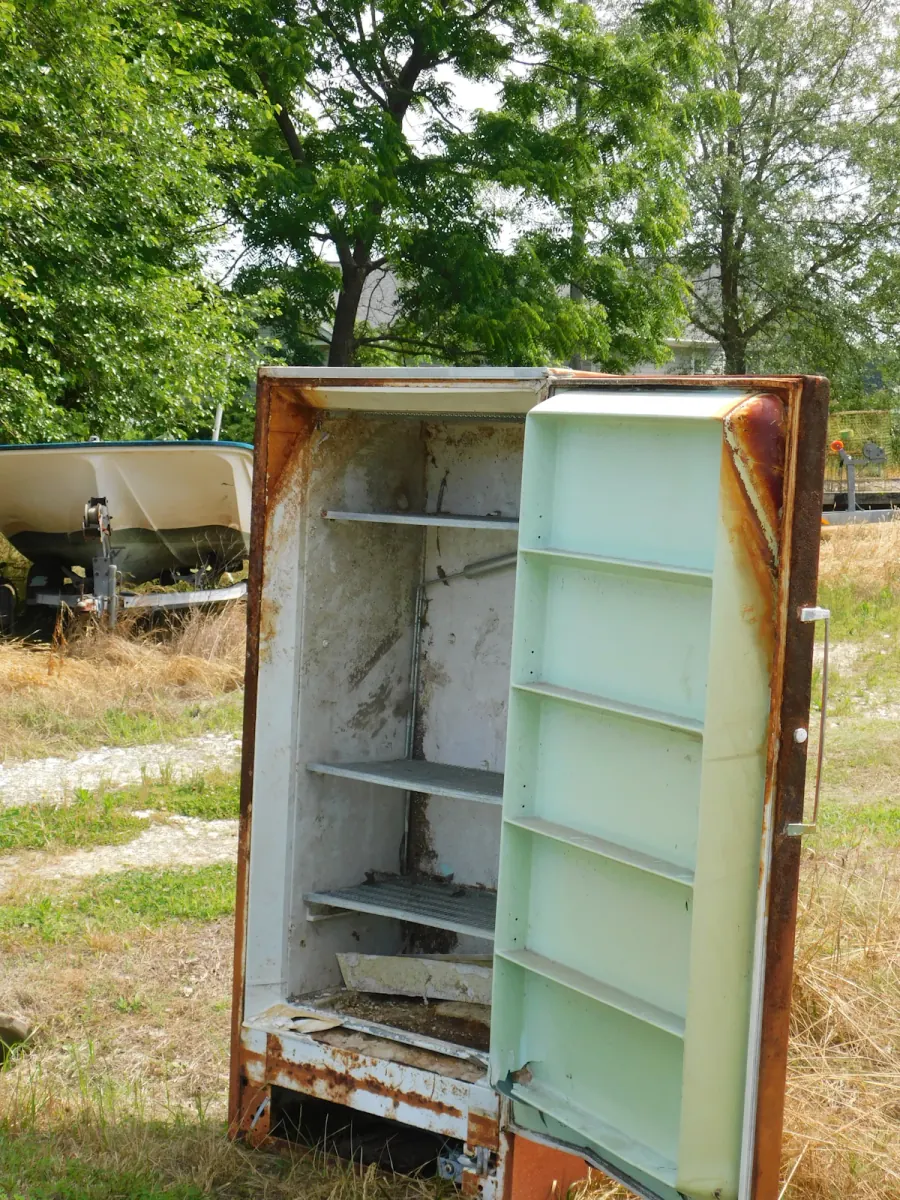
Refrigerators, freezers, window AC units and central AC units all contain refrigerant, and that refrigerant has to be recovered by a certified facility before the unit can be disposed of. The City of Brownsville enforces this by refusing any Freon appliance at the curb without a decal from a certified facility. The underlying rule is federal: EPA Section 608 prohibits knowingly venting refrigerant to the atmosphere.
Your two workable routes are to pay a certified technician to evacuate and tag the unit and then use the free city collection, or to hand the unit to a hauler who builds recovery into the price. The second is what most people do when the old unit is already in the carport. Costs for both routes are on our appliance removal page.
Where refused material actually has to go
Self-haul to the municipal landfill
The municipal landfill at 1001 E. Elizabeth Street, Brownsville, TX 78520 accepts construction and demolition debris that curbside collection refuses. The Public Utilities Board states that residents receive free disposal plus up to four tires per visit, and the site operates compost and scrap tire facilities. Access requires a valid driver's licence establishing residency, or a valid commercial hauling permit if you are working as a hauler.
Confirm hours before loading. The city has published Monday through Saturday 7:00am to 3:45pm while the Chapter 82 ordinance text states 8:00am to 4:30pm, and arriving after the gate closes with a full trailer is precisely how material ends up somewhere it should not be.
Household hazardous waste
Paint, solvents, pesticides, pool chemicals and fuel need a household hazardous waste route rather than any general disposal. These streams are regulated at state level by the Texas Commission on Environmental Quality, whose Region 15 office at 1804 W Jefferson Ave, Harlingen TX 78550 covers the Rio Grande Valley and can be reached at 956-425-6010.
What happens if you skip all of this
Dumping refused material rather than routing it is not a minor shortcut in Texas. Health and Safety Code Section 365.012 escalates by weight from a Class C misdemeanour at five pounds or less, up to a state jail felony at 1,000 pounds or more, or 200 pounds or more for commercial dumping, with fines reaching $10,000. Brownsville passed its own illegal dumping ordinance on December 15, 2009, carrying fines up to $2,000 plus abatement costs, injunctive relief and licence revocation, with reports taken at 546-HELP. Our permit and dumping guide covers all of it.
What to ask before you book anyone
- Is there anything on my list you will not take?
- Which facility does my load go to?
- Does the quote include refrigerant recovery if I have a fridge or an AC unit?
- Are tires, electronics or paint priced separately?
- Does the price cover labour, the truck and disposal, or only some of those?
Those five answers tell you whether you are dealing with an operator who has scoped the job or one who will revise the number at the curb. For the pricing mechanics behind those answers, see how junk removal pricing works and the Brownsville cost guide. Everything we cover is mapped on the service area page, and quotes start at the contact form.