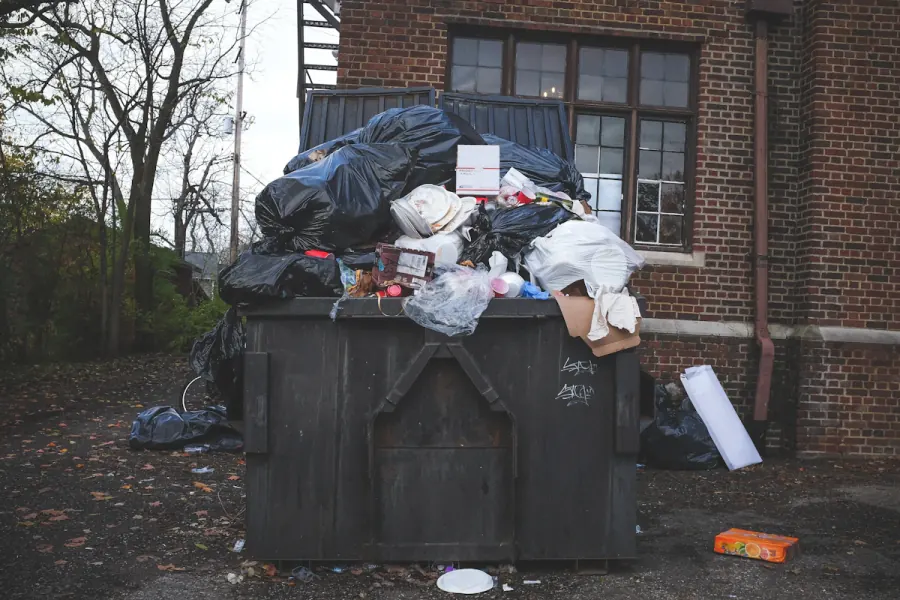
How the four-sector rotation works
Brownsville is divided into four collection sectors, and the brush and bulky item crew works one sector per week, so each address comes up roughly once a month. There is no appointment and no per-address time window. The crew enters your sector, works it across several days in whatever order the route dictates, and moves on. Understanding that single fact changes how you should set out material: you are not meeting a truck, you are making sure your pile is already correct and already there when the truck arrives.
Two sector boundaries are published plainly. Sector 3 is the area north of Boca Chica Boulevard and east of Paredes Line Road. Sector 4 is the area south of Boca Chica Boulevard and east of Expressway 77. Those two arterials, Boca Chica and Paredes, are the practical dividing lines most residents use to work out where they sit. If your address straddles a boundary or you are unsure, confirm with the city rather than guessing, because setting out for the wrong week costs you a full month.
The service itself is delivered by Republic Services under contract to the city, and it is funded through your municipal utility bill. There is no separate invoice, no per-item fee and no call-ahead charge for material that qualifies. That is why this program, and not any private hauler, is genuinely the cheapest way to get rid of qualifying junk in Brownsville.
The set-out rules that decide whether you get collected
Three rules account for nearly every missed pile in Brownsville, and all three are avoidable. Follow them and the free program works as advertised. Break any one of them and your material sits for another monthly cycle, which is exactly how a tidy curb turns into a code complaint.
Rule one: set out a full week early
Place your pile at the curb one week before your sector's collection week begins. The crew does not announce which day it reaches your block, and a pile placed the evening before is a coin flip. Residents who set out early get collected on the first pass with near-total reliability, and residents who set out late are the ones who conclude the program does not work.
Rule two: two separate piles, never one
Brush and bulky items are collected by different equipment and must be staged separately. Tree limbs, shrubs and bagged grass and leaves go in the brush pile. Sofas, tables, chairs, mattresses, washers, dryers, water heaters and stoves go in the bulky pile. Leave clear space between the two. A single mixed heap forces the operator to make a judgment call at the curb, and the safe call for them is to leave it.
Rule three: six feet of clearance, in every direction
Every pile needs at least six feet of clearance from gas meters, water meters, telephone boxes, overhead wires, parked cars and roof or awning overhangs. The grapple arm on the brush truck swings wide and lifts high, and no operator is going to risk shearing a gas meter or catching a service drop to save you a month. Look up as well as around when you pick your spot. A pile under a low wire is a skipped pile even if everything else is perfect.
What the City of Brownsville accepts
The accepted list is broad for ordinary household and yard material and costs nothing. Everything below qualifies for curbside collection on your sector week with no fee and no special handling, provided you follow the set-out rules above.
- Tree limbs and shrubs
- Bagged grass clippings and leaves
- Sofas, tables and chairs
- Mattresses and box springs
- Washers and dryers
- Water heaters
- Stoves and ranges
If your entire load appears on that list and your sector week is within reach, do not pay anyone. Our own advice to callers with a single accepted sofa or one mattress is to use the city. We would rather you use the free route and call us for the job it cannot do than pay us for something your utility bill already covers.
What the city refuses, and why
The refused list is the reason private junk removal exists in Brownsville at all. None of the following will be collected at the curb regardless of how neatly it is stacked or how early it goes out.
| Refused material | Why it is refused | Where it has to go instead |
|---|---|---|
| Construction and demolition debris | Outside the residential bulky program | Municipal landfill at 1001 E. Elizabeth Street, or a hauler |
| Roof shingles, sheet rock, lumber | Remodel and re-roof waste, not household bulky | Landfill C&D area, or a hauler with a permit |
| Concrete, asphalt, bricks, dirt | Weight exceeds curbside equipment limits | Landfill, or a heavy-debris hauling load |
| Freon appliances without a decal | Refrigerant must be recovered by a certified facility first | Certified evacuation and tag, then curb, or a hauler |
| Tires | Handled as a separate scrap tire stream | Scrap tire facility at the landfill site |
| Liquids and hazardous waste | Regulated waste, not municipal solid waste | Household hazardous waste collection, never the curb |
| Car parts | Not household bulky waste | Scrap metal recycler, or a hauler |
| Cardboard boxes | Recycling stream, not bulky collection | Curbside recycling, flattened |
| Household garbage | Belongs in your regular cart | Weekly cart service |
Refused-material list per City of Brownsville brush and bulky item collection guidance. Landfill address and free-disposal statement per the Brownsville Public Utilities Board.
The Freon appliance trap
The single most common surprise for Brownsville households is the refrigerator. The city will not collect any Freon appliance without a decal from a certified facility confirming the refrigerant was recovered, and that covers refrigerators, freezers, window AC units and central AC units. This is not municipal fussiness. Federal rules under EPA Section 608 make knowingly venting refrigerant to the atmosphere illegal, and the decal is the documentation that the unit was handled correctly upstream of the curb.
You have exactly two workable paths. Pay a certified technician to evacuate and tag the unit, then set it out on your sector week at no further cost. Or hand the unit to a hauler who builds recovery into the job, which is what most people do when the old fridge is already out in the carport and the new one is arriving Tuesday. Our appliance removal page walks through both routes with the costs attached.
Self-hauling to 1001 E. Elizabeth Street
The municipal landfill at 1001 E. Elizabeth Street, Brownsville, TX 78520 is where the refused list goes when you handle it yourself. It accepts construction and demolition debris, and the Public Utilities Board states that residents receive free disposal along with up to four tires per visit. The site also operates compost and scrap tire facilities, which is why tires have a legitimate destination even though the curb does not.
Access is gated on proof of standing. A valid Texas driver's license showing Brownsville residency gets a resident in. Anyone hauling as a business needs a valid commercial hauling permit under Chapter 82 of the city code, which is covered in detail on our hauling permit guide.
When the free program is not the answer
Hire a hauler when the material is on the refused list, when the volume exceeds what a single monthly pass will take, or when your deadline is shorter than the rotation. Those three tests cover nearly every legitimate reason to pay for junk removal in Brownsville, and if none of them apply, the honest answer is to use the city and keep your money.
The timing test bites hardest around moves and closings. A monthly rotation means the worst case gap between your cleanout and your next sector week is close to four weeks, which does not work for a lease end, a closing date or a foreclosure and eviction turnover. The volume test bites on garages and estates, where a packed two-car garage is a full truckload and the curb program is built for a household month, not a decade of storage.
The refused-material test is the most common of the three. A bathroom remodel, a re-roof or a fence teardown produces exactly the sheet rock, shingles and lumber the curb will not touch, which is the entire subject of our construction debris page.
Why the rotation matters more in hurricane season
A monthly collection cycle is workable in ordinary weather and inadequate after a storm. Cameron County sits on the Gulf Coast at the southern tip of Texas, and the Rio Grande Valley has taken direct damage repeatedly: Beulah came ashore near Brownsville as a Category 3 on September 20, 1967 with a 15 to 20 foot surge, Dolly hit in July 2008 at around 100 mph, and Hanna in July 2020 destroyed mobile homes and hundreds of roofs across Cameron and Hidalgo counties.
After any of those events, every address in every sector generates debris in the same week, and a rotation designed for normal household volume cannot absorb it. That is the argument for clearing loose yard material before June 1 rather than after a warning, which is the subject of our pre-hurricane yard cleanup guide, and for knowing how storm debris cleanup is separated and priced once the wind has passed.
If you live outside the city limits
Cameron County addresses outside Brownsville city limits are on a different system entirely. The county runs mandatory solid waste service through Republic Services at a published rate of $93.30 per quarter plus a $5 setup charge, with one 96-gallon cart placed within five feet of the mailbox by 6:30 a.m. on collection day. County solid waste can be reached at (956) 247-3535 and Republic at 1-800-423-7316.
That county arrangement is cart service, not a brush and bulky rotation, so unincorporated addresses around Los Fresnos, Rancho Viejo and the colonias generally have fewer free options for oversized material than city residents do. Our service area page lists the communities across Cameron and Hidalgo counties we cover.
Set-out checklist
- Confirm your sector using Boca Chica Boulevard, Paredes Line Road and Expressway 77.
- Set the pile out one full week before your sector's collection week.
- Stage brush and bulky items as two separate piles.
- Keep six feet clear of meters, telephone boxes, wires, cars and overhangs.
- Bag grass and leaves. Loose clippings scatter and get left.
- Pull anything on the refused list back out of the pile before collection day.
- Get a recovery decal on any Freon appliance, or arrange a hauler for it.
- If the job will not fit the cycle, send photos for a flat quote instead of letting material sit on the right of way.