The Brownsville ordinance
The City of Brownsville passed its illegal dumping ordinance on December 15, 2009, and it provides for fines of up to $2,000. The ordinance also reaches beyond the fine itself, providing for abatement costs, injunctive relief and license revocation. That combination is the part people underestimate: the fine is capped, the cost of cleaning up the site is not, and a business can lose its license on top.
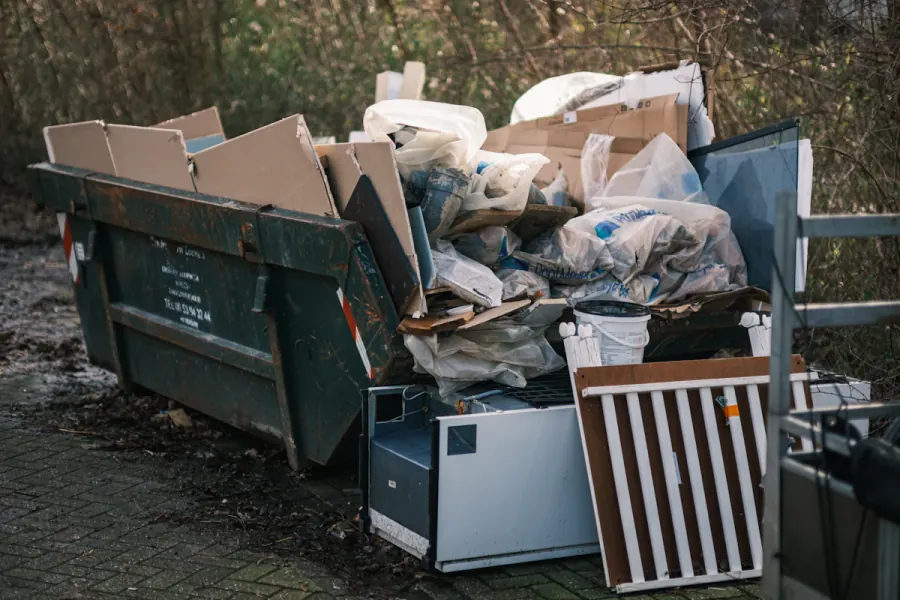
Enforcement is a live issue in the Rio Grande Valley rather than a theoretical one, because the geography makes dumping easy. Vacant lots, levee and canal maintenance roads, resaca banks and rural roadsides are all quiet, accessible and adjacent to the drainage infrastructure the region depends on when a tropical system arrives. Material in a drainage channel is not just an eyesore, it is a flood-risk problem for everyone downstream.
Illegal dumping can be reported to the City of Brownsville on 546-HELP. The useful details are the location, date and time, a description of the material, and a vehicle description or plate if the dumping was witnessed.
Chapter 82 and the approved disposal rule
Chapter 82 is Brownsville's solid waste chapter, and Section 82-8 is the provision that does the work: disposal must occur at a location and in a manner approved by the director of public works. That single requirement is what converts an informal drop-off into an offence, and it applies regardless of whether the land belongs to someone else, to the city or to you.
Chapter 82 also governs access to the municipal landfill, and it sets out two doors. A resident hauling their own household material uses a valid Texas driver's license as proof of Brownsville residency. A business hauling waste uses a valid commercial hauling permit. Those are different routes for different activities, and a contractor cannot use the residency door.
Municipal codes are amended over time. Verify the current Chapter 82 text in the city's published code of ordinances before relying on any specific section for a business decision. Brownsville's solid waste rules are set out in Chapter 82 of the code of ordinances.
The Texas weight tiers
State penalties escalate with the amount dumped, and they apply in addition to the city ordinance rather than instead of it. The tiers come from Texas Health and Safety Code Chapter 365, Section 365.012.
| Amount dumped | Offence class | Maximum penalty |
|---|---|---|
| 5 pounds or less | Class C misdemeanour | Fine up to $500 |
| Over 5 lb up to 500 lb | Class B misdemeanour | Up to $2,000 and 180 days |
| 500 to 999 lb, or 5 to 199 lb commercial | Class A misdemeanour | Up to $4,000 and 1 year |
| 1,000 lb or more, or 200 lb or more commercial | State jail felony | Fine up to $10,000 |
Tiers as set out in Texas Health and Safety Code Section 365.012. Commercial thresholds are substantially lower than non-commercial ones. City of Brownsville penalties under the December 15, 2009 ordinance, up to $2,000 plus abatement, injunctive relief and license revocation, apply separately and in addition.
Two things are worth drawing out of that table. First, the thresholds are low in real terms. A single sofa clears five pounds many times over, which puts an ordinary fly-tip into Class B territory before anything else is counted. Second, the commercial columns are dramatically lower: 5 pounds for Class A and 200 pounds for a state jail felony, against 500 and 1,000 pounds otherwise.
The state regulator and the facility rules
Municipal solid waste facilities in Texas are regulated by the Texas Commission on Environmental Quality. Cameron County sits in TCEQ Region 15, based at 1804 W Jefferson Ave, Harlingen TX 78550-5247, telephone 956-425-6010. That is the office with jurisdiction over waste facilities serving Brownsville and the surrounding Valley.
On the technical side, municipal solid waste transfer stations are defined at 30 Texas Administrative Code Section 330.3(163), operating standards sit in Subchapter E, and registration requirements are at Section 330.9(e). Those provisions matter to anyone operating or using a transfer facility rather than to an ordinary household, but they are the reason a legitimate hauler can name where a load went and an illegitimate one cannot.
Where waste can legally go in Brownsville
The municipal landfill
The City of Brownsville landfill at 1001 E. Elizabeth Street accepts construction and demolition debris and operates a compost facility and a scrap tire facility on site. Public Utilities Board material has stated free disposal for residents plus four tires per visit. Access is via residency proof or a commercial hauling permit as described above.
Confirm the hours before driving out. City materials give Monday to Saturday, 7:00 a.m. to 3:45 p.m., while the Chapter 82 ordinance text gives 8:00 a.m. to 4:30 p.m. We publish both because the discrepancy is real and in the sources, not a transcription error on our side.
Curbside collection, within its limits
The city brush and bulky program, delivered through Republic Services on a four-sector monthly rotation, accepts tree limbs, shrubs, bagged grass and leaves, sofas, tables, chairs, mattresses, washers, dryers, water heaters and stoves. It refuses construction and demolition debris, roof shingles, sheet rock, concrete, asphalt, lumber, cardboard boxes, liquids, hazardous waste, bricks, dirt, car parts, household garbage and unrecovered Freon appliances. The rules are on the bulk and brush schedule page.
County service outside the city
Cameron County residential solid waste service is delivered through Republic Services, with county solid waste reachable on (956) 247-3535 and Republic on 1-800-423-7316. Mandatory service has been billed at $93.30 per quarter with a $5 setup charge, providing one 96 gallon cart to be placed within five feet of the mailbox by 6:30 a.m. Outside the city limits, that is the baseline rather than the Brownsville program.
Household hazardous waste
Paint, solvents, pesticides, pool chemicals, motor oil, antifreeze and lead-acid batteries cannot go to the curb or into a general junk load. Confirm current household hazardous waste options with City of Brownsville Public Works, since collection events and accepted lists change over time.
The Freon rule, which is a disposal rule
The City of Brownsville will not collect any appliance containing Freon without a recovery decal from a certified facility confirming the refrigerant has been removed. That is a disposal compliance requirement rather than a preference, and it reflects federal refrigerant rules administered by the United States Environmental Protection Agency.
In practice this is the single most common reason a Brownsville appliance sits at a curb uncollected. The route through it is certified recovery before disposal, explained on appliance removal.
How to keep your own name off a dump site
Waste is traceable. Envelopes, prescription labels, delivery boxes and paperwork routinely identify the household or business a dumped load came from, and enforcement follows the material. That is why the most important question to ask a hauler is not the price, it is where the load is going.
Ask for the permitted facility by name. Ask whether they hold a commercial hauling permit. Treat a refusal to answer either as disqualifying, because abatement costs and enforcement action attach to the generator as well as the dumper. We name the disposal point on request on every job, which is also covered on are junk removal companies worth it.
Rules across Cameron County
Brownsville city rules, Cameron County service and the separate arrangements in Harlingen, San Benito, Los Fresnos and Port Isabel are not identical, and McAllen sits in Hidalgo County under a different county authority entirely. Our coverage and the disposal route for each area are on the service area page. If you want material moved legally with the facility named, start at the quote form.
This page summarises publicly available ordinance and statute information for general guidance and is not legal advice. Municipal codes and state statutes are amended over time. Verify current requirements with the City of Brownsville, Cameron County or a qualified attorney before relying on any of it for a business decision.