How much junk removal costs in Brownsville TX
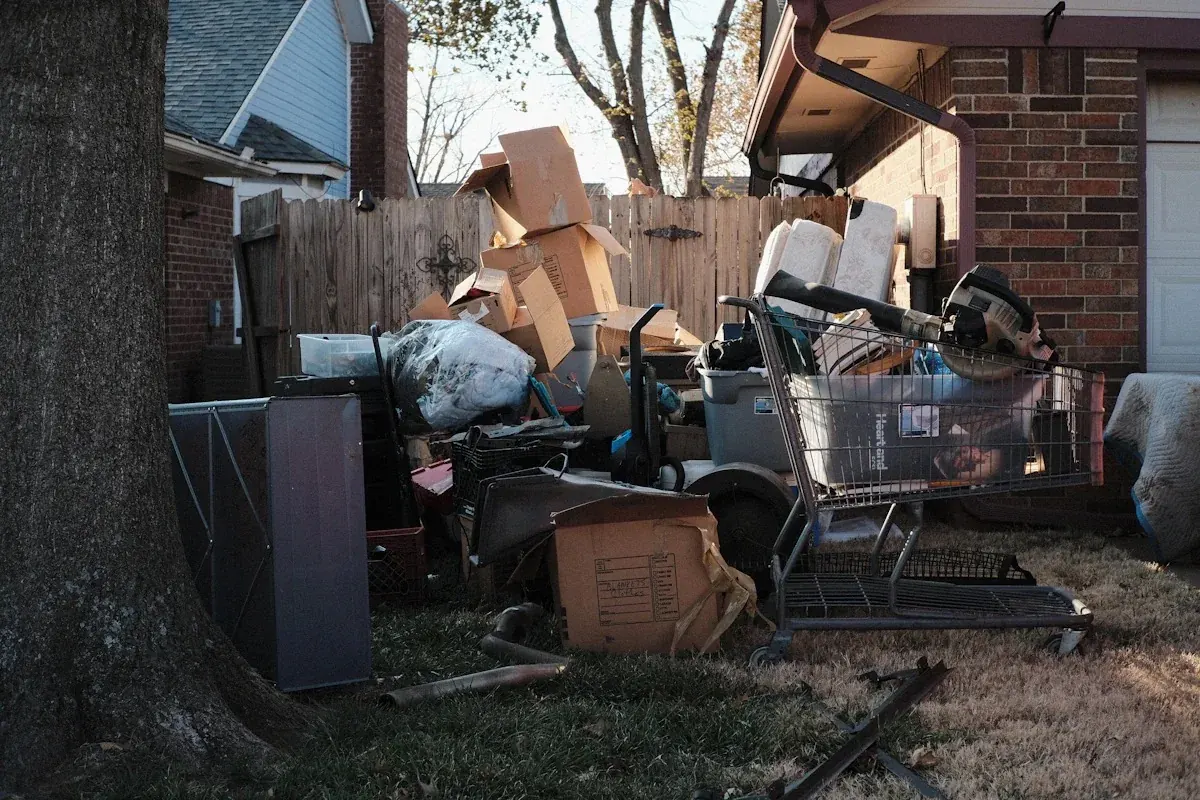
Junk removal in Brownsville costs between $130 and $850 for almost every residential job, with a single item at the low end and a packed fifteen cubic yard truck at the top. The national average job is about $241 and typical homeowner spend sits between $150 and $350, but Brownsville median household income is $52,130, roughly a quarter below the Texas median, so realistic local pricing tracks the lower half of those national bands rather than the middle. One local rate aggregator puts the Brownsville range at $102 to $612.
| Load size | Typical price | What that usually looks like |
|---|---|---|
| Single item | $130 - $300 | One couch, mattress, fridge or treadmill, curbside |
| About 1/8 truck | $130 - $200 | A few bags plus one small piece of furniture |
| About 1/4 truck | $120 - $350 | A bedroom's worth, or a small garage corner |
| About 1/2 truck | $250 - $500 | A packed single-car garage or a small apartment |
| Full truck (~15 cu yd) | $450 - $850 | A full garage, a shed, or a small cleanout |
Ranges compiled from Dropcurb, HomeGuide and Angi 2026 junk removal cost data, adjusted toward the lower half of the national band to reflect Brownsville median household income of $52,130. Full sourcing on the cost guide page.
The reason quotes come as a range until someone sees the pile is that this trade prices by volume, not by weight. A standard truck holds roughly fifteen cubic yards and the industry quotes in fractions of it. Price per cubic foot averages about $1.50. Weight only changes the math on dense debris like concrete, brick, dirt and roof shingles, where half a truck can exceed a legal axle rating and the load has to be split.
Full breakdowns per item, per load and per specialty job live on the Brownsville cost guide, and the mechanics of volume pricing are explained on how junk removal pricing works.
What the City of Brownsville will not take
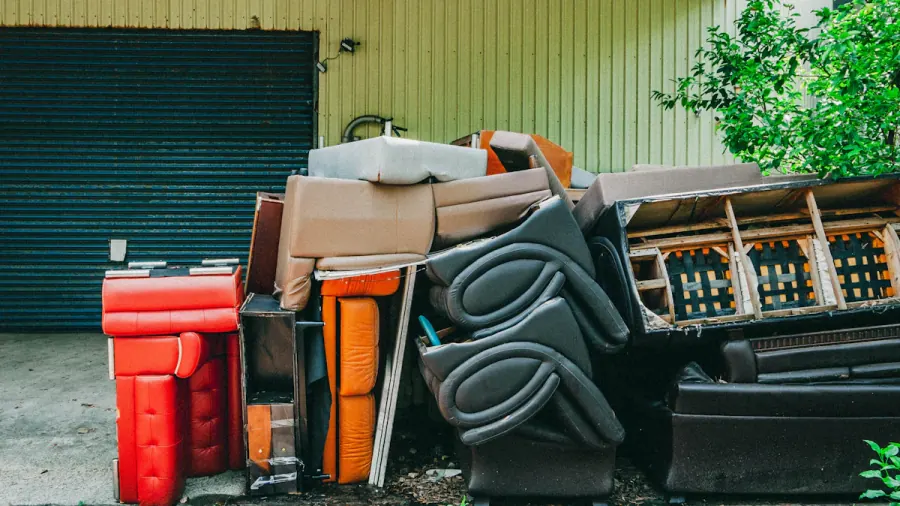
The City of Brownsville brush and bulky item program refuses construction and demolition debris, roof shingles, sheet rock, concrete, asphalt, lumber, cardboard boxes, liquids, hazardous waste, bricks, dirt, car parts, household garbage, and any Freon appliance without a certified recovery decal. That refusal list is the entire reason private hauling exists here. Everything else about the city program is good: it is delivered through Republic Services, it is included in your utility bill, and it will take tree limbs, shrubs, bagged grass and leaves, sofas, tables, chairs, mattresses, washers, dryers, water heaters and stoves.
The timing is the other gap. Brownsville runs four sectors on a rotating monthly cycle, one sector per week, and residents are asked to set items out a week ahead of their scheduled week. Sector 3 is everything north of Boca Chica Boulevard and east of Paredes Line Road. Sector 4 is south of Boca Chica Boulevard and east of Expressway 77. If your lease ends on the fifteenth and your sector week is the twenty-eighth, the free option does not help you. The full rotation, the two-pile rule and the six-foot clearance rule are on the bulk and brush schedule page.
How the job actually runs
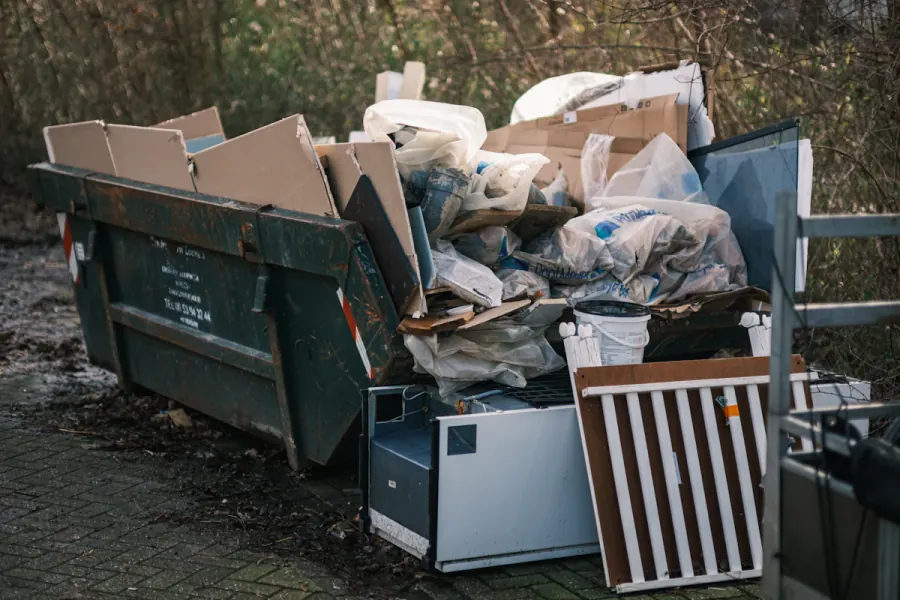
Every job runs the same five steps, and the price is fixed at step one rather than discovered at the end. The crew confirms the number in front of you before anything is loaded, which is the single thing that separates a straightforward hauling job from a bad one.
- 1Send photos and get a flat price
Fill in the quote form with two photos of the pile and one wide shot of the path a crew would walk. You get back a flat all-in price, not an hourly rate and not a range that moves on the day.
- 2Pick a window that suits you
Same-day and next-day slots are usually open in Brownsville. Tell us whether you need to be there or whether it is a driveway, side-yard or alley pickup we can handle without you.
- 3We confirm the price on arrival, before loading
The crew walks the pile with you and confirms the quoted number before anything goes in the truck. If the pile grew since the photos, you hear the new price first and decide then.
- 4We load, including stairs and backyards
Carrying is the job. Second-floor apartments, backyard sheds, narrow downtown alleys and side gates are all included in the quoted price rather than billed as surprise access fees.
- 5We sweep up and haul to a permitted facility
The space is broom-swept before we leave, and the load goes to donation, scrap, the city compost facility or the Brownsville Municipal Landfill depending on what it is. Ask and we will tell you where it went.
Where we work
Our core service area is Brownsville and Cameron County, and we run north to San Benito and Harlingen, east to Port Isabel, and west into eastern Hidalgo County including McAllen. Brownsville is the southernmost city in the continental United States, sitting directly across the Rio Grande from Matamoros, Tamaulipas, with a 2024 population of 189,177 and a projected 192,044 for 2026. It is the eighteenth largest city in Texas and the county seat of Cameron County.
Brownsville neighborhoods
Southmost sits at the southern edge near the Los Tomates Port of Entry and has seen real population growth since the early 2020s with SpaceX becoming the area's largest employer, so new construction now sits directly beside 1960s and 1970s housing. That mix produces two very different jobs on the same street: renovation debris from one property and a fifty-year accumulation cleanout from the one next door. Cameron Park is a census-designated place of roughly 12,456 residents and one of the largest colonias in Texas by population. Historic Downtown, anchored by the 1882 and 1914 Cameron County Courthouses and the Cueto Building, all on the National Register of Historic Places, means tight alleys, no driveways and upstairs walk-downs. Rancho Viejo sits on US-77 and US-83 four miles northwest with 2,838 residents as of 2020, and Los Fresnos had 8,114 in the same count, up from 5,542 in 2010.
The rest of the Valley
Harlingen is about twenty-five minutes north on US-77/83 and runs its own municipal transfer station, which means different disposal rules than Brownsville's landfill. San Benito is fifteen to twenty minutes north, a resaca city with older housing stock and a smaller municipal program. Port Isabel is twenty-five to thirty minutes east on TX-48 and TX-100, the gateway to South Padre Island across the Queen Isabella Causeway, where heavy vacation-rental turnover and salt-air-destroyed patio furniture create a junk profile nowhere else in the Valley has. McAllen is roughly an hour west and sits in Hidalgo County, so county solid waste rules and enforcement differ from Cameron County. Each has its own page under service area.
Hurricane season and the debris that follows
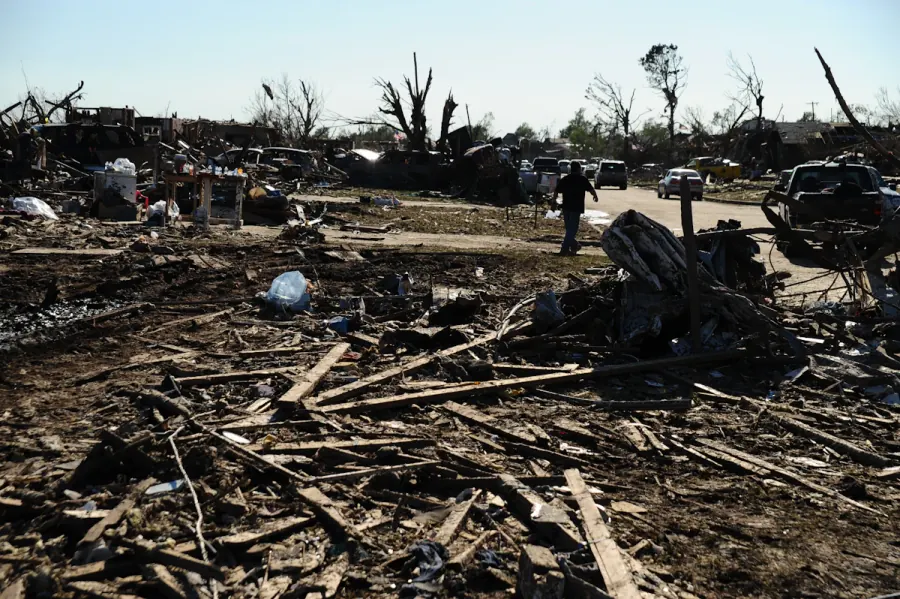
Post-storm debris in Brownsville is overwhelmingly material the city brush program refuses, which is why storm cleanup is a private-hauler job from the first day. Fence panels, roof shingles, soaked drywall, ruined carpet, downed limbs and collapsed sheds are what a Gulf storm actually leaves in Cameron County yards, and shingles, sheet rock and construction debris are explicitly on the city's refused list.
The record here is not theoretical. Hurricane Beulah made landfall near Brownsville as a Category 3 on September 20, 1967, with storm surge possibly reaching fifteen to twenty feet across Deep South Texas, killing eighteen people and destroying or heavily damaging roughly 3,000 homes, at a cost of $217 million in 1967 dollars, about $1.59 billion in 2017 terms. Dolly struck the Lower Rio Grande Valley in July 2008 with roughly 100 mph winds. Alex brought flooding in mid-2010. Hurricane Hanna in July 2020 destroyed several mobile homes in Cameron County, damaged hundreds of roofs, and produced flash flooding that required numerous water rescues across Cameron and Hidalgo counties.
Atlantic hurricane season runs June 1 to November 30. The cheapest storm work is the work done in May, which is covered on pre-hurricane yard cleanup, and the aftermath is covered on hurricane debris cleanup.
Why permitted disposal matters here
Using an unpermitted hauler transfers real legal exposure onto you, and in Texas the commercial penalty tiers are severe. Texas Health and Safety Code Sec. 365.012 makes commercial disposal of as little as five pounds a Class A misdemeanor carrying a fine up to $4,000 and up to a year in jail, and 200 pounds or 200 cubic feet or more a state jail felony with a fine up to $10,000. Brownsville's own illegal dumping ordinance, passed December 15, 2009 and described by the city as the first noteworthy ordinance of its kind in Texas, carries a fine up to $2,000 plus abatement, injunctive relief and license revocation.
Chapter 82 of the Brownsville Code of Ordinances requires that anyone bringing garbage, trash or rubbish to the sanitary landfill present a valid driver's license as proof of residency or a valid commercial hauling permit, and Sec. 82-8 requires disposal at a location and in a manner approved by the director of public works. If a hauler cannot tell you which permitted facility your load is going to, that is the question worth asking twice. The whole regulatory picture is laid out on the hauling permits and illegal dumping page.
Se habla espanol
Quotes, scheduling and the on-site walkthrough can all happen in Spanish. Brownsville is about 94 percent Hispanic with a median age of 31.2, and a large share of households here are Spanish-dominant, so a hauler who can only work in English is genuinely harder to hire. Write your request in Spanish on the quote form and the reply comes back in Spanish.