The rule that makes this a hauling job
Construction and demolition debris cannot be set out for City of Brownsville collection. The brush and bulky program, delivered through Republic Services on a four-sector rotation, publishes a refusal list that names construction and demolition debris directly, along with roof shingles, sheet rock, concrete, asphalt, lumber, cardboard boxes, liquids, hazardous waste, bricks, dirt, car parts and household garbage.
What it does accept is brush and a short list of bulky household items: sofas, tables, chairs, mattresses, washers, dryers, water heaters and stoves. That list is the whole program. Anything generated by a remodel, a demolition, a re-roof or a slab removal falls outside it, which is why a stack of drywall offcuts can sit at a Brownsville curb through two sector cycles without anyone touching it.
The material is not illegal to dispose of locally. The municipal landfill at 1001 E. Elizabeth Street accepts construction and demolition debris. The gap is purely in collection, and that gap is the entire reason private hauling exists for this category in Brownsville. The sector calendar and the six-foot clearance rules are on the bulk and brush schedule page.
What debris removal costs in Brownsville
Construction debris hauling in Brownsville typically runs $250 to $850 per load. Light material prices by volume at roughly $1.50 per cubic foot, which puts a full truck at $450 to $850. Dense material prices differently because a truck hits its weight limit long before the bed looks full, so a modest-looking pile of concrete or tile can still be a complete load.
| Material | What fills a load | Typical price per load |
|---|---|---|
| Framing scrap and lumber | Full truck of offcuts and dimensional timber | $450 to $750 |
| Drywall and sheet rock | Full truck of board offcuts and dust-bagged waste | $400 to $700 |
| Roofing shingles | Roughly 15 to 20 squares, weight-limited | $450 to $850 |
| Tile, mortar and thinset | Weight-limited, often a part-full truck | $350 to $650 |
| Concrete, brick and block | Weight-limited, staged loads | $450 to $850 |
| Mixed remodel debris | Half to three-quarter truck, typical bathroom or kitchen | $250 to $500 |
| Small cleanup | Quarter truck, one room or a punch-list clear | $150 to $275 |
Volume bands follow the industry rate of roughly $1.50 per cubic foot with full-truck loads at $450 to $850, drawn from published national cost surveys; observed Brownsville-area job pricing has ranged from $102 to $612. Dense-material rows reflect that concrete, tile and roofing reach a truck's weight limit before its volume limit. Roll-off dumpster rental for comparison runs $300 to $600. Every load is quoted before it is filled.
If you are weighing hauling against renting a truck or a container and doing it yourself, the hauling versus do-it-yourself comparison runs the actual numbers including rental, mileage and tipping.
What we haul most often in the Valley
Kitchen and bathroom remodel debris
This is the most common Brownsville call. Old cabinets, countertop sections, a cast iron or acrylic tub, a toilet, vanity units, backer board, tile and the drywall that came off with it. A typical single-bathroom gut lands around a half to three-quarter truck. Cabinets and tubs are bulky but light; the tile and backer board carry the weight.
Slab, patio and driveway removal
Concrete is the heaviest thing on a residential site and it gets staged rather than loaded in one go. A patio slab or a short driveway section usually means multiple weight-limited loads rather than one visit. If a hot tub pad is what is coming out, that often pairs with hot tub and spa removal as a single job.
Roofing tear-off
Shingles are dense and they are C and D waste, not storm debris, regardless of why the roof came off. That classification surprises homeowners during hurricane recovery, because torn roofing feels like exactly the kind of thing a storm collection would take. It is not. Storm vegetation and storm-destroyed household goods are a different category, covered on hurricane debris cleanup.
Fencing, decking and outbuildings
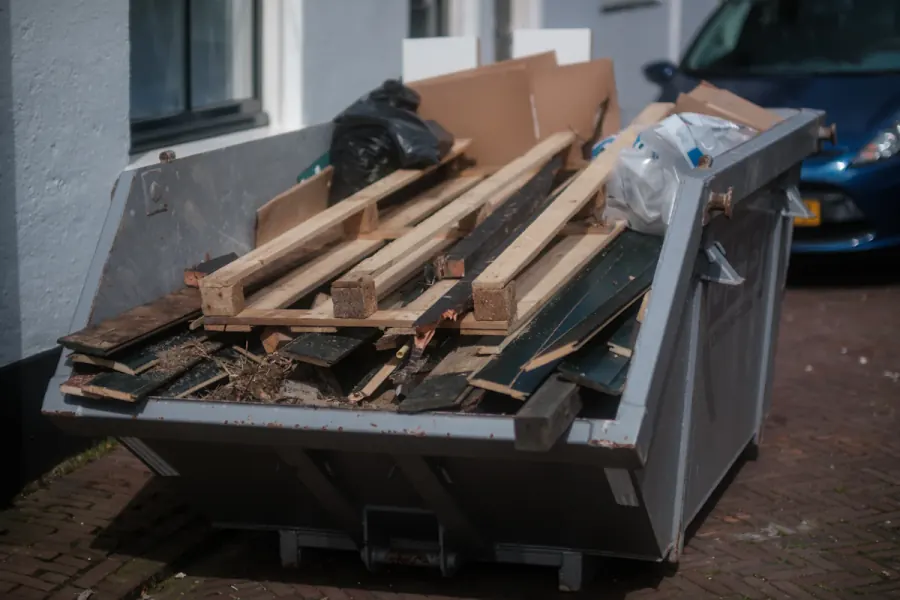
Wind damage to wooden fencing is routine in a coastal county, and a demolished fence line is construction debris the moment it stops being a fence. Same for decking, sheds and carport structures. Nails and fasteners in this material are the reason it goes into a truck rather than a curbside pile in a neighbourhood where children walk to school.
Landfill access, permits and hours
The Brownsville municipal landfill at 1001 E. Elizabeth Street accepts construction and demolition debris, and the site also runs a compost facility and a scrap tire facility. Access for residents hauling their own material normally requires a valid Texas driver's license as proof of Brownsville residency. Anyone hauling as a business needs a valid commercial hauling permit instead.
Confirm the hours before you drive out with a loaded trailer, because the public record is inconsistent. City materials give Monday to Saturday, 7:00 a.m. to 3:45 p.m. The Chapter 82 ordinance text gives 8:00 a.m. to 4:30 p.m. We flag that discrepancy rather than pick one, because a wasted trip is a real cost. Chapter 82 also requires disposal at a location and in a manner approved by the director of public works, which is the provision that makes casual dumping an offence rather than a technicality. Full detail on the permit and dumping rules page.
How a debris haul runs
- 1Photograph the pile and the access
One shot of the debris, one of how a truck reaches it. Material type and access set the price, since dense material prices by weight and light material by volume.
- 2Separate the regulated material
Suspected asbestos, lead-painted components, paint, solvents and adhesives are not ordinary debris and need a licensed or hazardous waste route. Flag them before quoting.
- 3Flat quote before anything is loaded
One all-in number covering labour, transport and tipping. No hourly meter and no separate disposal fee appearing later.
- 4Load by hand or by machine
Framing scrap, drywall and packaging load fast. Concrete, tile and brick go in staged loads so the truck stays inside its weight limit.
- 5Tip at a permitted facility
Construction and demolition debris goes to a facility licensed to accept it, with the disposal point named on request. Metal is separated for scrap first.
Contractors and scheduled jobsite hauling
Scheduled hauling costs less per load than emergency calls, and for an active Brownsville jobsite it removes a recurring problem. Debris that accumulates past a certain point blocks trades, creates trip hazards and, on a residential street, starts generating neighbour complaints. Booking a recurring pickup tied to the trade sequence keeps the site working.
The other consideration for a working contractor is the hauling permit question, since disposing of customers' waste as a business is a different regulatory position to disposing of your own. Ongoing arrangements, recurring schedules and multi-site work are covered on commercial junk removal.
Debris hauling across Cameron County
We haul construction debris throughout Brownsville and out across Los Fresnos, Rancho Viejo, San Benito, Harlingen, Port Isabel and eastern Hidalgo County, on both residential remodels and active jobsites. Coverage is listed on the service area page. Send a photo of the pile and the access route through the quote form and you will get a per-load number back.